|
|
|
|
|||||||||
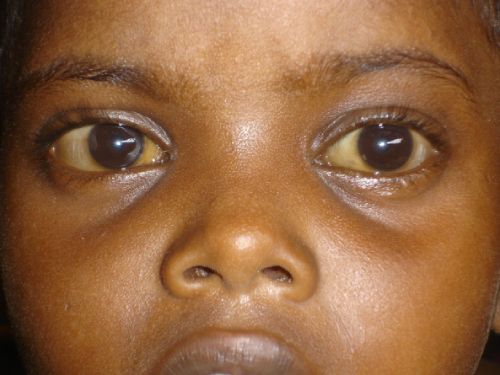
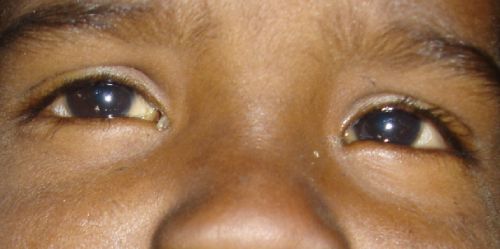
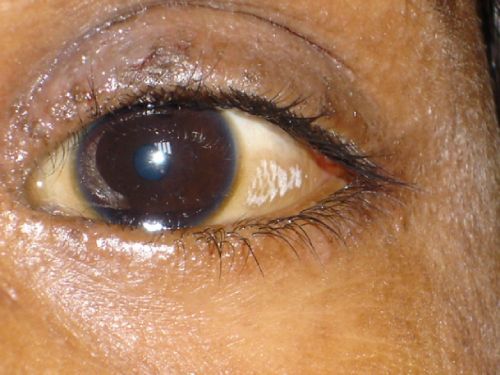
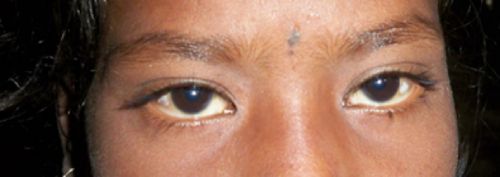
Vitamin A DeficiencyThis website presents observations and statistics regarding Vitamin A deficiency (noticed as Bitot´s spots) among children, adolescents, and adults in the greater Kolkata and Howrah area in India. The data are historical, having been collected primarily between 2009 and 2020. Since 2020, Bitot`s spots in children, adolescents, and adults in the greater Kolkata and Howrah area have been observed only very sporadically (in only three persons between 2020 and 2026). Bitot's spots are fine, white conjunctival deposits measuring a few millimetres across that shimmer with a pearly luster in the light. They sometimes appear to be composed of distinct subunits. They are almost always located lateral to the cornea.
The observations concerning the prevalence of Bitot`s spots were made at charitable medical facilities serving individuals from lower socioeconomic backgrounds in selected urban and rural areas within the greater Kolkata/Howrah region of West Bengal, India. The medical services of this NGO (Howrah Society for the Poor) have been free of charge for people from lower socioeconomic background. The people visiting these clinics for the underprivileged spanned all age groups. A single physician of the NGO examined approximately 40,000 consecutive new patients for the presence of Bitot’s spots. No one of the patients with Bitot`s spots attended because he or she had noticed the Bitot`s spots or any other ocular sign of Vitamin A Deficiency. All of them came for other ailments.
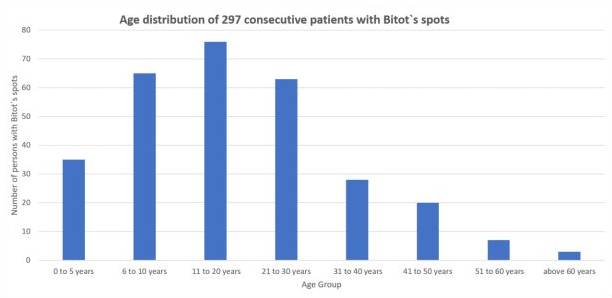
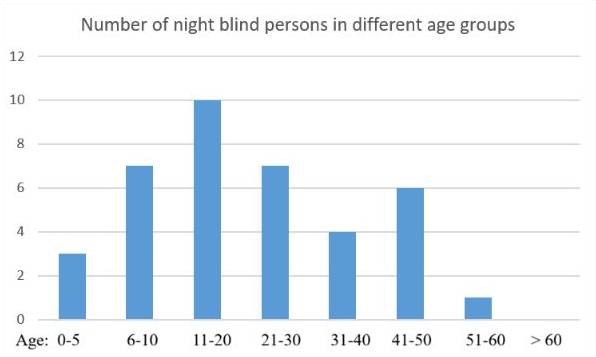
Out of approximately 40,000 patients examined, a total of 297 were identified as having Bitot's spots. The mean age of these patients was 19.4 years. The group comprised 173 males and 124 females. One hundred individuals presented with unilateral Bitot's spots, while 197 had bilateral spots. Thirty-eight of these 297 persons had night blindness.
The age distribution of patients with Bitot's spots shows that Bitot's spots—and by extension, vitamin A deficiency—are not a problem confined to children under the age of five, but also occur during school age and adulthood, at least in sick people from a disadvantaged socioeconomic background
Medical conditions affecting the 297 patients with Bitot's spots were recorded—with a maximum of two diagnoses per patient. The conditions most frequently associated with the presence of Bitot's spots included:
Living in extreme poverty (homelessness, lack of food) was noted for 26 of the 297 patients with Bitot's spots. Tuberculosis patients may have presented to the outpatient clinic with greater-than-expected frequency because the clinic had a particular focus on the diagnosis and treatment of tuberculosis. One observation was that all patients with chronic liver diseases and Bitot`s spots had a short survival time. Another observation was that only 5 of the 297 patients with Bitot's spots had diabetes mellitus. This is remarkably low, given the high prevalence of diabetes mellitus—even among individuals of low socioeconomic status—in the greater Kolkata/Howrah area.
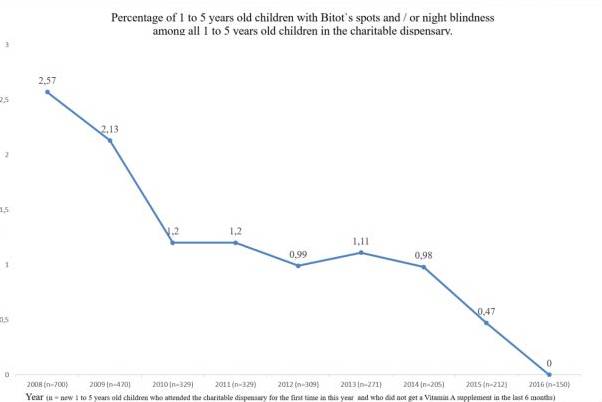
Among the Under 5 years old children who attended the charitable medical facility the prevalence of Bitot's spots declined over the period measured from 2009 to 2020.
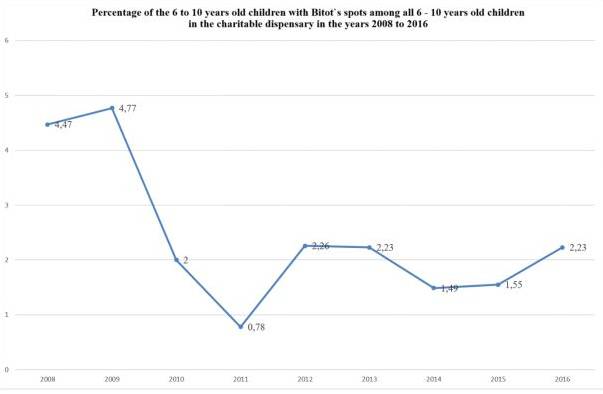
The prevalence of Bitot's spots among the 5 – 10 years old children who attended the charitable medical facility declined over the period measured from 2009 to 2020, but it did not drop to zero.
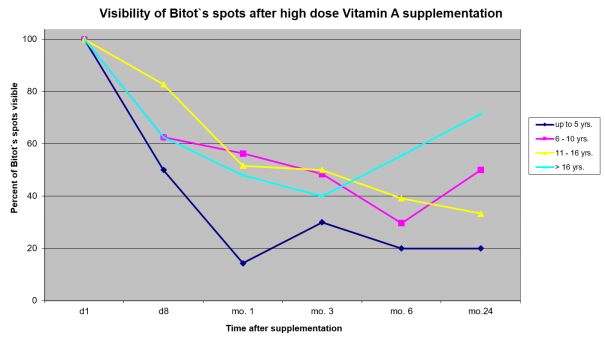
Children under the age of five with Bitot’s spots received three doses of 200,000 IU of vitamin A, administered on days 1, 2, and 8. In the absence of guidelines, all older children, adolescents, and adults with Bitot’s spots received an empirical regimen of two doses of 200,000 IU of vitamin A. Patients with Bitot's spots were asked to return for follow-up examinations after one week, one month, three months, six months, and 24 months. During these visits, they were assessed to see whether Bitot's spots were still present or had reappeared. Only a subset of patients attended the follow-up appointments, and it remains unclear whether those who did attend represented a group with a specific risk profile regarding the persistence or recurrence of Bitot's spots compared to those who did not.
The patients examined were not representative of the general population of the selected districts and villages because they belonged to the local lower socioeconomic stratum. More affluent individuals of the areas had access to better-resourced providers within the local healthcare system—services for which they paid.
Nor were the examined patients representative of the lower socioeconomic class in their area, because they were sick individuals who had actively sought medical help. The prevalence of Bitot's spots among the healthy population of the lower socioeconomic class in these areas could differ significantly. Nevertheless, the observations allowed for certain indirect inferences |
|
Copyright © - www.howrahtb.com. All Rights Reserved |